

Early learning thrives when children feel safe, seen, and encouraged to explore at their own pace. Small, steady choices at home and in the classroom can strengthen curiosity, confidence, and communication without turning childhood into a checklist. The goal is to build a foundation where children enjoy learning, feel capable when challenges appear, and develop habits that support them far beyond the early years.
Create a predictable daily rhythm
Young children settle faster and learn more when their day follows a gentle pattern. Regular wake-up times, meals, play windows, and sleep routines reduce stress and free up attention for discovery. When families compare options and wonder what structure looks like in the best primary school in Bangalore, it often comes down to consistent transitions that help children anticipate what happens next, while still leaving room for spontaneity and fun.
Talk more, question better
Conversation is one of the most powerful learning tools, especially when adults ask open questions and pause for answers. Instead of “Did you have fun?” “What did you see that surprised you the most?” or “How did you figure that out?” Many parents evaluate choices through the lens of the board education system, yet strong language growth depends less on labels and more on daily dialogue that stretches vocabulary and thinking in a warm, low-pressure way.
Set up a home space that invites learning
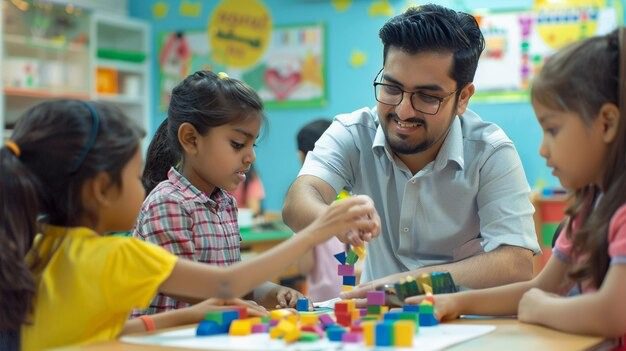
A “learning corner” does not need fancy furniture or expensive materials. A small basket of picture books, crayons, scrap paper, puzzles, and building blocks can signal that exploration is welcome. Keep supplies visible and reachable, rotate items every couple of weeks, and display a few drawings at the child’s eye level. This kind of environment supports independence because children can start activities without constantly requesting permission or help.
Read aloud in a way that builds connection
Reading aloud works best when it feels like shared time, not a test. Use expressions, point to pictures, and let children interrupt with observations. Re-read favorite stories because repetition strengthens comprehension and helps children predict, sequence, and retell. To deepen engagement, ask them to “read” pictures back to you, guess what a character might do next, or relate the story to something they experienced recently.
Make play the main engine of growth
Play is how young children practice language, self-control, cooperation, and problem-solving. Pretend kitchens, toy animals, dress-up, and simple role-play help children experiment with emotions and social rules. Outdoor play builds balance and resilience, while messy play with sand, water, or dough supports sensory development. When adults respect play as meaningful work, they reduce pressure and increase the child’s willingness to take healthy risks.
Support early math and thinking in everyday moments
Math in the early years is mostly pattern, comparison, and reasoning. Invite children to sort socks by color, count fruit into a bowl, or measure ingredients while cooking. Use words like “more,” “less,” “equal,” “taller,” and “next.” Board games with dice build number sense and patience, while simple puzzles strengthen visual reasoning. The point is not speed; it is building comfort with noticing relationships and trying strategies.
Help children build independence step by step
Confidence grows when children can do small tasks on their own: putting shoes in a spot, choosing clothes, cleaning up toys, or helping set the table. Break tasks into tiny steps, demonstrate once, and then let them try while you stay nearby. Offer choices within boundaries. Do you want the blue cup or the green one? So children practice decision-making without feeling overwhelmed or in charge of everything.
Build emotional skills through naming and modeling
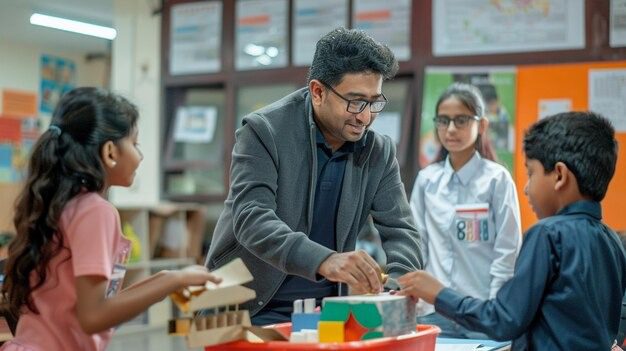
Children learn emotional control by borrowing the calm of the adults around them. Name feelings in real time: “You look disappointed,” “That was frustrating,” “You’re proud of your tower,” and model what coping can look like: slow breaths, a short pause, asking for help, or trying again. When adults treat mistakes as information instead of failure, children become more persistent and less afraid of new challenges.
Partner with teachers and stay curious
Strong support comes from shared understanding between home and school. Ask teachers what your child enjoys, what seems hard right now, and what skills the class is focusing on. Share helpful context about routines, sleep, or changes at home. A thoughtful education model can vary in style, but progress accelerates when adults communicate consistently and focus on the child’s needs rather than comparisons with peers.
Conclusion
Supporting children in early education does not require perfection or constant instruction. It’s built through routines that feel steady, conversations that respect a child’s ideas, playful experiences that strengthen thinking, and patient guidance that grows independence and emotional balance. When adults stay attentive and flexible, children learn to trust themselves as learners, and that confidence becomes one of the strongest gifts they can carry into every new stage of school and life.